
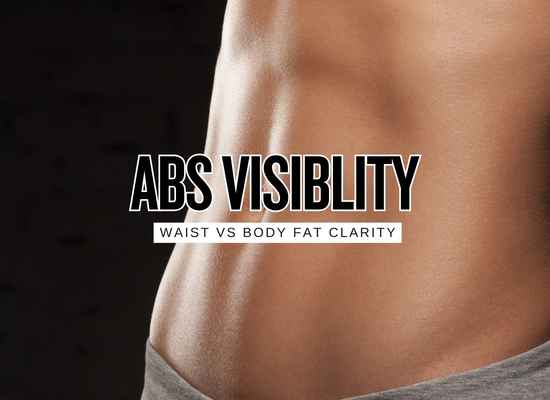
A lot of people get stuck because their core is strong but their abs still look blurry. The missing piece is usually measurement. Body fat percentage sounds like the perfect metric, but most people measure it with tools that have meaningful error. Waist size is simpler and often tracks the exact area that determines whether abs show. This report compares both, shows when each one wins, and gives you a practical way to use them together without overthinking it.
Waist trend usually beats a casual body fat percentage reading for predicting visible abs. Body fat percentage can be useful, but common measurement methods can be off by several points, which is a big deal near abs-visible ranges. The practical winner for most people is a simple system: waist trend for the midsection, plus photos for confirmation, plus body fat percentage only if you measure it consistently and treat it as a range.
Abs are local. Body fat percentage is global. Visible abs depend on how much fat you store over the abdomen, plus posture and ab thickness. Waist size tracks the zone that matters most, but it can swing with bloat and water. Body fat percentage can add context, but it can swing with hydration and device assumptions. Trends beat single numbers.
Most practical predictor
Waist measurement trend
Low cost, low friction, and it tracks the exact region that determines whether abs show.
Most misunderstood metric
Body fat percentage
Useful as context, but easy to misread as precise when it is often an estimate.
Best two metric combo
Waist plus consistent photos
Same lighting, same posture, same distance, every two weeks.
| Situation | Waist measurement | Body fat percentage | Best move |
|---|---|---|---|
| Predicting visible abs | Often strongest because it tracks abdominal fat changes | Helpful only if measurement is consistent and reasonably accurate | Use waist weekly plus photos every two weeks |
| Scale stuck but look improving | Often drops when fat loss is real | Can bounce due to hydration | Trust waist trend more than day-to-day BF |
| Strength gaining phase | Can rise even with good composition changes | Can show recomposition if measured well | Use waist plus performance and photos |
| Short time windows | Responds to bloat and meal timing | Responds strongly to hydration assumptions | Look at 2 to 4 week trends |
| Comparing across heights | Height matters | Methods vary widely | Use waist-to-height ratio for a cleaner comparison |
Waist measurement that stays reliable
Pick one landmark and repeat it forever. Different spots create fake progress or fake stalls.
- Choose one method: navel or narrowest point, then stay consistent.
- Same time of day, ideally after restroom and before large meals.
- Relaxed belly, no sucking in, tape snug but not digging.
- Log one note if something unusual happened: travel, salty meal, digestion.
Body fat percentage that is less misleading
Treat it as a range unless you use high-quality testing under consistent conditions.
- Same device, same time, same hydration pattern, same routine.
- Use averages, not single readings.
- Near visible abs, a few percentage points of error can flip the conclusion.
This tool uses waist-to-height ratio as the main signal and adds an optional body fat estimate for context. It produces a practical interpretation, not a guarantee, because genetics, ab thickness, posture, and water swings change the final look.
Scenario A Body fat percentage looks lean but waist is not changing
If waist and photos do not improve, abs visibility usually does not improve. Many BF devices shift with hydration and assumptions.
- Trust waist trend and photos more than a single BF reading.
- Tighten the common leak points for one week: oils, sauces, drinks, weekend drift.
- Restore a consistent daily step floor and reassess after two weeks.
Scenario B Waist is dropping but BF percentage is bouncing
This often means the BF method is noisy while real midsection change is happening.
- Keep measurement conditions consistent and compare weekly averages.
- Use photos every two weeks to confirm definition change.
- Do not panic cut based on a single reading.