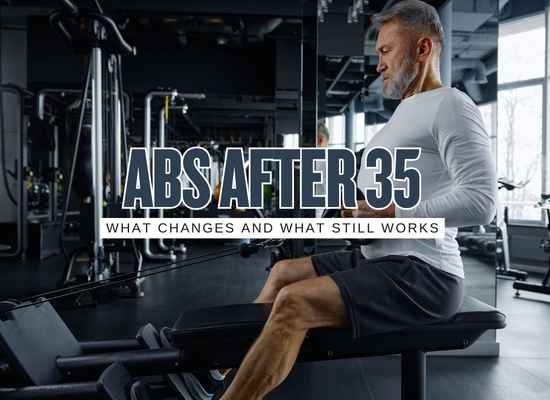
After 35, getting lean enough to see abs usually stops being a “just work out a little harder” problem and becomes a body-composition management problem. The fundamentals still work, but recovery, protein intake, muscle retention, sleep, and waist management tend to matter more because adults gradually lose muscle mass and strength with age, central fat becomes more important to track, and poor sleep can quietly increase calorie intake. At the same time, none of this means visible abs are off the table. It means the margin for sloppy habits is smaller than it was in the twenties. Older adults can still build muscle, improve strength, reduce waist size, and improve body composition with resistance training, sufficient protein, regular activity, and better sleep.
The body still responds, but it responds best to a smarter setup
A lot of people hit their mid-thirties and assume the abs conversation is basically over unless they want to live like a fitness model. That is not really the problem. The bigger issue is that the old casual approach stops working as well.
After 35, visible abs usually depend less on finding a trick and more on protecting muscle, managing waist size, recovering well, and staying consistent enough for fat loss to show up where people care most.
What actually changes after 35
- Muscle mass and strength do not usually vanish at 35, but age-related loss starts to become more relevant over time if strength work is missing.
- The body becomes less forgiving of low-protein eating, random training, and poor sleep.
- Central fat and waist size deserve more attention than they often get.
- Recovery quality matters more because getting lean while keeping muscle becomes the real challenge.
- The basics still work. They just need to be treated like basics, not like optional extras.
The body-composition shift most people feel first
1️⃣ Muscle retention becomes more valuable
A younger person can sometimes get away with sloppy dieting and random exercise and still end up looking decent. After 35, protecting lean mass becomes a much bigger deal because visible abs are not just about losing weight. They are about losing enough fat while keeping enough muscle for the torso to still look athletic.
2️⃣ Waist size matters more than people think
It becomes easier to focus on total body weight and miss the more important question of where body fat is sitting. Waist circumference remains a useful marker because a person can have a “normal” BMI and still carry higher-risk abdominal fat. From an abs perspective, this also explains why weight loss and visible midsection change do not always move at the same pace.
3️⃣ Recovery becomes part of the physique plan
This is where a lot of people get frustrated. They assume they need a more advanced ab routine when the real missing piece is sleep, sensible training volume, and better recovery between sessions. The body can still improve well after 35, but it usually responds better to consistency than to punishment.
4️⃣ The margin for sloppy nutrition gets smaller
When protein is weak, meal structure is inconsistent, and weekends run loose, the visual result often looks softer than expected. That is not because the body stopped responding after 35. It is because the fundamentals now carry more of the visual burden.
What still works very well
Resistance training
Still one of the strongest tools for preserving and building lean mass, improving strength, and shaping the look underneath the fat.
Enough protein
Still one of the most practical habits for fullness and muscle support, especially during a fat-loss phase.
Regular activity
Still one of the best ways to support energy expenditure, health, and long-term adherence.
Sleep
Still a major influence on appetite, calorie intake, recovery, and how sustainable the whole process feels.
The after-35 playbook
Build the week around lifting first
Adults are still advised to do muscle-strengthening activity on at least 2 days a week, and for the after-35 crowd that baseline matters because muscle is harder to take for granted. A good setup usually makes lifting the anchor and lets cardio support it, not replace it.
Set a protein floor, not a perfect target
Research reviews in older adults and exercising adults continue to support higher protein intake than the general minimum, often around 1.0 to 1.2 g/kg/day for older adults to maintain muscle and around 1.4 to 2.0 g/kg/day for active adults trying to support training and lean mass. The real win is not obsessing over the perfect number. It is avoiding low-protein days that quietly drag the physique outcome down.
Track waist, not just weight
If abs are the goal, waist measurement belongs in the routine. NHLBI guidance notes that a waist circumference above 35 inches for women or 40 inches for men increases health risk, and larger waist size can matter even when BMI looks acceptable. From a visual standpoint, waist trends often explain why someone feels “lighter but not leaner.”
Respect anabolic resistance without treating it like defeat
Aging muscle becomes somewhat less responsive to anabolic signals, a concept often called anabolic resistance. That sounds discouraging, but the practical takeaway is actually simple: strength training and adequate protein matter more, not less. The answer is usually better structure, not surrender.
Protect sleep like a fat-loss tool
NIH reported that in a randomized clinical trial, adults who increased how much they slept took in fewer calories. That matters after 35 because the leanest-looking routines are usually the ones that reduce friction. Better sleep helps people eat more deliberately and recover well enough to keep the rest of the plan working.
What changes versus what still delivers
| After 35 reality | What people often do wrong | What still works |
|---|---|---|
| Lean mass is less automatic | Diet harder and lift less | Lift consistently and keep protein up |
| Waist size matters more | Watch the scale only | Track waist and photos too |
| Recovery affects the look more | Treat sleep like an afterthought | Use sleep to support appetite and training quality |
| Progress may be less forgiving | Rely on random effort and weekend resets | Use a steadier weekly routine |
| The fundamentals matter more | Search for a new hack | Repeat the proven habits longer |
After-35 abs builder
This quick tool highlights whether your current setup is built around the habits that matter more with age.
The real message
After 35, the body is not broken. It is just less impressed by half-effort fundamentals. People can still build strength, improve body composition, and get visibly leaner, but the process usually rewards structure, recovery, and patience more than it used to.
That is not bad news. It is a clearer set of rules.