
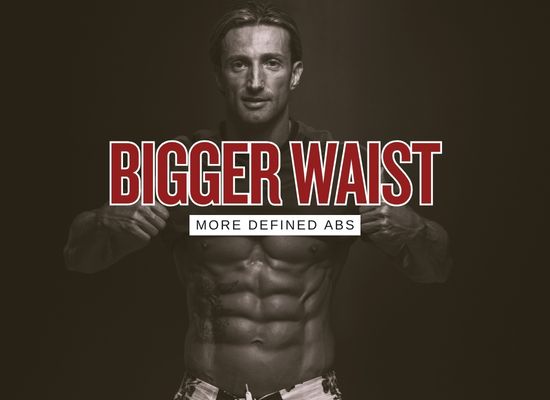
Ab training can change your waist, but the scary version is rare
The honest answer is not “never train obliques.” It is this: front-ab growth usually improves definition, while heavy side-wall specialization can add thickness if you train it like a bodybuilder trains arms.
Front bricks versus side walls
The rectus abdominis builds the six-pack look from the front. The obliques sit on the sides and shape the waist outline. That difference is the whole article.
The clean answer
Yes, ab training can make the waist look bigger in some cases, but regular core work is rarely the problem. The bigger risk comes from sustained, progressive, high-volume oblique training, especially heavy side bends, heavy loaded carries, heavy rotation and aggressive lateral flexion work done for size.
The muscle map
| Muscle | Visual effect | Growth concern | Smart training call |
|---|---|---|---|
| Rectus abdominis | Six-pack blocks down the front | Usually helps definition, not width | Train progressively with crunch and reverse-crunch patterns |
| External obliques | Side lines and outer waist shape | Can add side thickness if heavily specialized | Train enough for strength, avoid chasing size if waist width worries you |
| Internal obliques | Deep side-wall support | Less visible, but still part of waist thickness | Use anti-rotation and bracing work |
| Transversus abdominis | Deep corset-like bracing muscle | Not a typical “blocky waist” driver | Use breathing, dead bugs, Pallof presses and controlled bracing |
Rectus growth is usually the good kind of ab growth
Building the rectus abdominis can make the six-pack look deeper at the same body-fat level. Cable crunches, machine crunches, reverse crunches and ab-wheel progressions usually add front definition rather than side width.
- Best for visible six-pack depth.
- Lowest waist-width concern.
- Progress with load, reps or range.
- Keep ribs and pelvis controlled so the hip flexors do not take over.
Oblique growth is where the “bigger waist” fear comes from
The obliques live on the side of the trunk. If you progressively load them with enough hard weekly volume, growth can add tissue to the waist outline. The effect is usually modest, but it is plausible.
- Heavy side bends are the most obvious width-focused exercise.
- Heavy rotation can train side-wall muscle hard.
- Loaded carries can build strong obliques, especially with heavy progression.
- Side planks train obliques, but normal doses rarely create a sudden blocky look.
A bigger waist is often not muscle
If the tape measure rises after you start training abs, check the boring variables first. Ab muscle does not grow overnight. Food volume, sodium, bloating, creatine, constipation, alcohol, camera angle and posture can change the waist faster than muscle growth can.
- Measure relaxed, same time of day, after a normal exhale.
- Use a 4-week trend instead of one reading.
- Track body weight, waist, photos and training changes together.
- Do not blame oblique growth after three workouts.
The dose makes the difference
A few sets of side planks or Pallof presses will not suddenly widen the waist. Treating obliques like a growth project with heavy loads, high volume and constant progression is a different story.
The waist-growth risk table
| Exercise choice | Width risk | Use it for | Small-waist adjustment |
|---|---|---|---|
| Cable crunch | Low | Front-ab thickness | Keep it as a main ab builder |
| Reverse crunch | Low | Pelvis control and lower-ab emphasis | Control the eccentric, avoid swinging |
| Ab wheel | Low to medium | Anti-extension and bracing | Use clean range, avoid back sag |
| Pallof press | Low to medium | Anti-rotation without heavy side bending | Moderate volume, perfect control |
| Side plank | Medium | Lateral trunk strength | Use holds, not endless weighted progression |
| Heavy suitcase carry | Medium to high | Oblique strength and loaded bracing | Keep volume modest if waist width is a priority |
| Heavy side bend | Highest | Direct oblique hypertrophy | Skip or keep light if you want less side thickness |
The small-waist core plan
Build the rectus abdominis hard. Train obliques for control. Do not specialize in heavy side-flexion volume unless you actually want more side-wall muscle.
The practical training split
| Goal | Direct ab work | Oblique work | Best setup |
|---|---|---|---|
| Sharper six-pack, smaller-looking waist | 6 to 10 sets weekly | 2 to 4 moderate sets weekly | Cable crunch, reverse crunch, ab wheel, Pallof press |
| Athletic core and strong trunk | 6 to 12 sets weekly | 4 to 8 sets weekly | Crunches, rollouts, carries, side planks, rotation |
| Thicker obliques and blockier power look | 8 to 14 sets weekly | 8 to 12 hard sets weekly | Loaded carries, heavy side bends, heavy rotation |
The measurement audit
| Waist changed | Most likely cause | Fast check | Training move |
|---|---|---|---|
| Up in one day | Food, sodium, digestion, water | Measure next morning | Do not change training yet |
| Up with body weight rising | Calorie surplus | Review 2-week food and weight trend | Keep abs, tighten intake |
| Up only when flexing or bracing | Better trunk tension | Measure relaxed after normal exhale | No panic |
| Up after 8 to 12 weeks of heavy obliques | Possible oblique growth | Compare photos, tape and exercise log | Reduce direct oblique volume |
| Stable waist, better ab lines | Good rectus growth or fat loss | Keep the same measurement setup | Continue the plan |
Waist Growth Risk Checker
Use this quick tool to see whether your ab routine is more likely building front definition, balanced core strength or side-waist thickness.
Your likely waist read
The myth to avoid
Do not remove all oblique training because of waist fear. Weak obliques do not create a better physique. The smarter move is to train them for control and strength without turning every week into heavy side-waist hypertrophy work.
Reader references
Useful reader-facing references include the 2026 ACSM resistance-training position stand, the MRI study on Pilates and abdominal muscle volume, the rotational movement training and oblique thickness trial, the 2026 resisted crunch ultrasound study, the Cleveland Clinic abdominal muscle anatomy guide, the NHLBI waist circumference and abdominal fat guidance, and the abdominal exercise and abdominal fat trial.