The plank gets better when the seconds stop being the goal
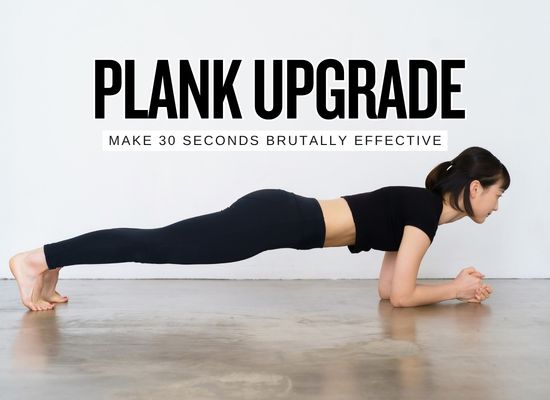
I would rather see a clean, shaking, perfectly braced 30-second plank than a two-minute hold where the hips sag, the lower back takes over and the abs are just along for the ride.
Core training note: This report is educational and should not replace medical care, physical therapy or individualized coaching. If planks cause sharp back pain, neck pain, shoulder pain, wrist pain, numbness, dizziness or symptoms that feel unsafe, stop and get qualified guidance. People with recent surgery, pregnancy or postpartum concerns, hernia concerns, pelvic-floor symptoms or spinal conditions should use a clinician-guided progression.
The sweet spot is quality plus tension
A standard plank becomes less useful when it turns into a waiting game. Once 30 seconds is easy, the better upgrade is to make the same half-minute denser: more tension, more leverage, more anti-rotation, more control or more load.
The core rule
Do not chase a longer plank until you can keep ribs down, glutes tight, pelvis controlled, shoulders stable and breathing calm for 30 seconds. After that, make the plank harder before making it longer.
The fast upgrade map
| Current plank problem | Smarter upgrade | Main challenge | Stop if |
|---|---|---|---|
| Too easy but form is good | Long-lever plank | More abdominal tension from leverage | Lower back arches |
| Abs do not feel engaged | Hard-style tension plank | Glutes, ribs and pelvis work together | You hold your breath or cramp |
| Need more dynamic challenge | Body saw plank | Anti-extension under movement | Hips drop during the saw |
| Hips twist during core work | Shoulder tap plank | Anti-rotation | Feet or hips swing wildly |
| Traditional plank feels stale | Feet-elevated plank | Body angle and shoulder demand | Shoulders pinch or neck strains |
| Need advanced challenge | Stability ball or suspension plank | Instability and bracing | Control disappears |
| Ready for load | Weighted 30-second plank | Progressive overload | Plate placement changes posture |
The 7 harder 30-second plank upgrades
Long-lever plank
Best first advanced moveMove your elbows slightly farther in front of your shoulders. That one change lengthens the lever and makes the abs work harder to keep the ribs and pelvis from separating.
This is the cleanest upgrade for people who can already plank well because it does not require equipment. The danger is moving too far forward too soon and dumping the stress into the lower back.
- Start with elbows only a few inches farther forward.
- Keep ribs down and glutes lightly squeezed.
- Stop the set before the lower back arches.
- Progress by moving the elbows slightly farther, not by chasing collapse.
Hard-style tension plank
Best for feeling the abs fastThis version turns a normal plank into a full-body tension drill. Pull elbows toward toes without moving them, squeeze glutes, tuck the pelvis slightly and brace like you are about to be bumped.
The goal is not relaxation. The goal is high tension for a short hold. A good hard-style plank can make 20 to 30 seconds feel like plenty.
- Squeeze glutes without lifting the hips high.
- Think ribs toward pelvis.
- Breathe in small controlled breaths.
- End the hold when bracing breaks, not when the timer wins.
Body saw plank
Best anti-extension upgradeStart in a forearm plank, then gently shift your body backward and forward like a saw. The farther your shoulders move from your elbows, the harder your abs must work to stop the spine from extending.
Use sliders, socks on a smooth floor or a suspension trainer if you are advanced. Keep the movement slow enough that the abs, not momentum, control the exercise.
- Move only as far as you can keep the pelvis controlled.
- Keep the shoulders packed and neck neutral.
- Use tiny saws before big saws.
- Count quality reps inside 30 seconds.
Shoulder tap plank
Best anti-rotation choiceFrom a high plank, lift one hand and tap the opposite shoulder without letting the hips twist. The point is not speed. The point is resisting rotation while one support point disappears.
Widen the feet at first. As control improves, bring the feet slightly closer. If the hips rock side to side, the exercise is too advanced or the reps are too fast.
- Move slowly enough to control the hips.
- Push the floor away through the support hand.
- Keep the shoulders square.
- Tap fewer times with better control.
Feet-elevated plank
Best body-angle upgradePlace the feet on a low step, bench or box. The elevated position changes the angle and usually raises the shoulder and anterior-core demand.
This upgrade can get ugly if the bench is too high. Start low. The plank should still look like a plank, not a sagging push-up position.
- Start with a low elevation.
- Keep elbows under or slightly in front of shoulders.
- Keep the neck long and eyes down.
- Stop if shoulder irritation appears.
Stability ball or suspension plank
Best advanced instability optionInstability can make the plank harder by forcing more corrections. A stability ball under the forearms, a suspension trainer under the feet or a suspended body saw can raise the challenge when the user already has good control.
The mistake is using instability too early. If the plank turns into shaking without alignment, you are not training better core control. You are just surviving a messy position.
- Use instability only after the floor plank is clean.
- Pick one unstable surface, not chaos everywhere.
- Keep the range small and the brace strong.
- Return to the floor if pain or form loss appears.
Weighted 30-second plank
Best measurable overloadAdding load can make a 30-second plank a true strength-endurance set. Use a light plate, sandbag or weighted vest only after bodyweight control is excellent.
Weight should make the plank harder without changing the shape. If the hips sag, the ribs flare or the plate slides around, the load is too much.
- Use a weighted vest or have a partner place the load carefully.
- Start lighter than your ego wants.
- Keep the hold at 20 to 30 seconds.
- Progress load slowly and keep breathing.
The perfect 30-second plank checklist
Use this before making any version harder.
Ribs stay down instead of flaring toward the floor.
Pelvis stays controlled without aggressive sagging or over-tucking.
Glutes help lock the pelvis without turning the plank into a pike.
Shoulders push the floor away and do not collapse toward the ears.
Small controlled breaths continue. A breath-hold is not core mastery.
The upgrade ladder
Level 1
Move: Standard forearm plank. Goal: Clean 3 sets of 30 seconds with steady breathing. Exit test: No sagging, no neck strain, no lower-back pressure.Level 2
Move: Hard-style tension plank or slightly long-lever plank. Goal: 3 sets of 20 to 30 seconds where the abs work immediately. Exit test: You can keep tension without breath-holding.Level 3
Move: Shoulder taps, body saws or feet-elevated planks. Goal: Control movement while the trunk stays quiet. Exit test: No hip swing, no rib flare, no low-back takeover.Level 4
Move: Suspension, stability ball or weighted plank. Goal: Add load or instability while preserving shape. Exit test: The harder version still looks controlled on video.The best progression rule
Make only one thing harder at a time. Longer lever, more tension, movement, instability and weight are separate upgrades. Stacking too many together turns training into guessing.
The plank mistake table
| Mistake | Result | Sharper replacement |
|---|---|---|
| Holding for 2 to 5 minutes with sagging hips | Lower back and shoulders take over | Use a harder 20 to 30 second variation |
| Adding instability too early | Random shaking instead of useful tension | Master floor control first |
| Doing every plank variation in one workout | Fatigue without progression | Pick one upgrade for 3 to 4 weeks |
| Letting breath disappear | High pressure and poor bracing practice | Use small controlled breaths |
| Training abs only with planks | Core plan gets narrow | Add side planks, carries, dead bugs and rotation control |
| Using pain as proof of intensity | Risk rises and skill drops | Stop at form loss or unsafe symptoms |
30-Second Plank Upgrade Selector
This tool picks the next harder plank based on your current form, equipment, pain signals and goal. It is not medical advice. Use it as a training filter before progressing.
Your next plank upgrade
The 3-week upgrade plan
| Week | Plank work | Companion core | Progress check |
|---|---|---|---|
| Week 1 | 3 sets of 20 to 30 seconds, one harder variation | Dead bug or bird dog | Film one set from the side |
| Week 2 | Same variation, slightly more tension or range | Side plank or suitcase carry | No sagging, no twisting, steady breath |
| Week 3 | Add one small progression only | Pallof press or slow mountain climber | Abs fatigue before back discomfort |
The 30-second standard
A harder plank should feel intense within the first 10 seconds, controllable through 20 seconds and barely sustainable by 30 seconds. If nothing happens until minute two, the version is too easy for your current goal.
The safer core menu
| If planks bother you | Use this instead | Training target | Reason |
|---|---|---|---|
| Wrists hurt in high plank | Forearm plank or dead bug | Anti-extension | Less wrist loading |
| Shoulders fatigue first | Dead bug, hollow hold regression, Pallof press | Trunk bracing | Core challenge without shoulder support limit |
| Lower back feels pinched | Shorter plank, bird dog, side plank from knees | Control and endurance | Reduces extension loss |
| Neck strains | Incline plank or quadruped shoulder taps | Alignment practice | Easier setup for neutral head position |
| Hips twist during taps | Wider feet or elevated-hands taps | Anti-rotation | Lets skill improve before intensity |
The long-hold trap
Long plank records are fine as a challenge, but they are not the most efficient route to better abs, better bracing or better training transfer for most people. After 30 clean seconds, the smarter move is progression.
Reader references
Useful reader-facing references include the recent EMG study comparing trained and untrained plank performance, the ACSM resistance-training position stand overview, the long-lever posterior-tilt plank EMG comparison, the core activation study on suspension body saw and roll-out exercises, the surface-stability plank activation study, the shoulder and scapular activity study involving plank variations, and the CDC adult physical activity guidance.