Cable machine ab workouts and bodyweight core training both deserve a place in a serious six-pack plan, but they solve different problems. Cable work is better when you need adjustable resistance, measurable progression, standing anti-rotation work, or loaded flexion like cable crunches. Bodyweight core training is better when you need control, joint-friendly practice, home convenience, trunk endurance, and foundational stability. The strongest plan is usually not cable versus bodyweight. It is cable plus bodyweight, programmed around the job you need the core to do: resist extension, resist rotation, brace under load, and flex with control. ACSM’s current resistance-training guidance emphasizes consistency, appropriate progression, and training major muscle groups, while CDC guidance still gives adults a weekly baseline of 150 minutes of moderate-intensity activity plus 2 days of muscle-strengthening activity. Core exercise research also supports the idea that different moves activate different trunk muscles, so one “best ab exercise” is usually the wrong way to think about it.
The best core plan is not cable or bodyweight
Cable machines and bodyweight drills are two different tools for the same larger goal. Cables make resistance easier to load, measure, and progress. Bodyweight training builds control, endurance, stability, and convenience. The smartest six-pack plan uses both, but not randomly. Each method should be matched to the exact core job you are trying to train.
Training safety note: Core training should not create sharp back pain, numbness, dizziness, hernia pressure, chest symptoms, or pain that changes normal movement. Anyone with a medical condition, recent surgery, pregnancy or postpartum concerns, severe back pain, or a history of hernia should get individualized guidance before adding loaded cable crunches, heavy rotation, or advanced plank variations.
The core does more than crunch
A complete abs plan should train anti-extension, anti-rotation, loaded bracing, and controlled flexion. Cable work is excellent for load and direction. Bodyweight work is excellent for control and repeatability.
The clean comparison
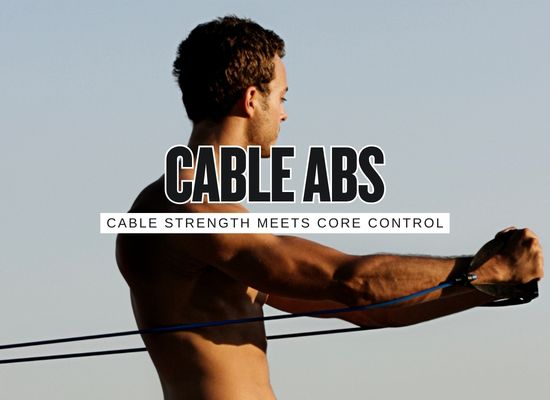
Cable ab work is the gym-based progression tool. It lets you set a weight, choose a pulley height, change angles, and track improvement in a way that bodyweight moves cannot always match. Cable crunches, Pallof presses, chops, lifts, standing anti-rotation presses, and kneeling cable rollouts can turn core training into a measurable strength plan.
Bodyweight core training is the foundation tool. It teaches the trunk to brace, hold position, resist sagging, and control the pelvis without needing a machine. Dead bugs, planks, side planks, hollow holds, reverse crunches, mountain climbers, bear crawls, and body saws are easy to scale and repeat almost anywhere.
The practical verdict
Cables are better for progressive load. Bodyweight is better for movement control. A serious six-pack plan usually needs both.
| Training need | Cable machine edge | Bodyweight edge | Best choice |
|---|---|---|---|
| Progressive overload | Easy to add small weight increases | Progression depends on leverage, time, range, and tempo | Cable |
| Home convenience | Requires gym, functional trainer, or cable setup | No equipment needed for most movements | Bodyweight |
| Anti-rotation | Excellent for Pallof presses, chops, lifts, and holds | Good with side planks, plank shoulder taps, and crawls | Cable for loading, bodyweight for control |
| Back-friendly learning phase | Can be controlled, but load can be misused | Easy to regress with dead bugs, side planks, and short holds | Bodyweight first |
| Visible ab development | Loaded flexion can help hypertrophy when tolerated | Builds endurance and control, but may become too easy | Cable plus bodyweight |
| Beginner setup | Useful with coaching and light loads | Usually easier to learn safely | Bodyweight first |
| Advanced core strength | Highly scalable with load and pulley angles | Highly scalable with leverage and instability | Both |
The cable machine case
Load makes progress easier to measure
The biggest advantage of cable machine ab work is measurable resistance. If you perform a cable crunch with 50 pounds this month and 70 pounds later with the same form, range, and tempo, you have a clear progression. That matters because the abs are muscles. They respond to tension, volume, control, and recovery, just like other muscles.
Bodyweight progress can be harder to measure because the load is your body and the difficulty changes through leverage. That does not make bodyweight inferior. It just means cables are cleaner for tracking strength-oriented ab work.
- Use cable crunches when controlled trunk flexion feels good and the lower back is not irritated.
- Use Pallof presses when you need anti-rotation strength without twisting the spine repeatedly.
- Use cable chops and lifts for diagonal force control, not sloppy swinging.
- Use small load jumps and keep form consistent before chasing heavier stacks.
Heavy does not always mean better
Cables make it easy to add weight before the trunk is ready. That can turn a cable crunch into a hip-flexor tug, a lower-back hinge, or a neck-pulling motion. It can also turn rotational work into momentum instead of core control. The machine gives you resistance, but it does not guarantee good mechanics.
The best cable ab exercises should feel controlled from start to finish. The weight stack should not slam. The ribs should not flare. The pelvis should not dump forward. If the movement turns into a full-body heave, the load is too high.
Cable form filter
If you cannot pause the movement, breathe behind the brace, and return the weight slowly, the cable load is probably too heavy for core training.
The bodyweight case
Control comes before load
Bodyweight core training is often the best starting point because it teaches position. Dead bugs teach rib and pelvis control. Planks teach anti-extension. Side planks teach lateral stability. Bear crawls teach trunk control while limbs move. Reverse crunches teach pelvic control. These are the skills that make loaded cable training safer and more effective later.
Bodyweight training also removes a major excuse. No gym. No cable machine. No waiting for equipment. A good bodyweight core session can be done in a bedroom, garage, hotel room, or office floor space.
- Use dead bugs and hollow holds to build anti-extension control.
- Use side planks and plank shoulder taps to build anti-rotation stability.
- Use reverse crunches for controlled lower-ab and pelvic movement.
- Use bear crawls when you want the core to stabilize while the arms and legs move.
Easy moves stop creating change
Bodyweight training can become too easy if it never progresses. A 60-second plank is useful for beginners, but holding longer and longer is not always the best path. Eventually, many people need harder leverage, longer range, slower tempo, more instability, added load, or a cable movement that allows cleaner resistance.
The bodyweight plan should have progression rules. A plank can become a body saw. A dead bug can become a band-resisted dead bug. A side plank can become a Copenhagen plank variation. A reverse crunch can become a hanging knee raise or cable reverse crunch pattern. The goal is not to make every move brutal. The goal is to keep the challenge high enough to matter.
Progression signal
If you can complete every set with perfect form and no meaningful fatigue, the exercise is probably ready for a harder variation.
The exercise matchup table
This is where the comparison becomes useful. Instead of choosing a side, match the exercise to the training job.
| Core job | Cable option | Bodyweight option | Best use |
|---|---|---|---|
| Anti-extension | Kneeling cable rollout or high-cable anti-extension hold | Dead bug, plank, body saw, hollow hold | Bodyweight first, cable later for advanced control |
| Anti-rotation | Pallof press, Pallof hold, cable anti-rotation walkout | Side plank, plank shoulder tap, bear crawl | Cable for measurable resistance, bodyweight for control |
| Controlled flexion | Cable crunch, kneeling rope crunch | Reverse crunch, stability-ball crunch, slow curl-up | Cable for hypertrophy, bodyweight for learning control |
| Diagonal force | Cable chop, cable lift, half-kneeling chop | Slow mountain climber, cross-body dead bug, crawling patterns | Cable if you need load through a diagonal line |
| Loaded bracing | Cable march, low-cable offset hold, cable carry variation | Plank, bear crawl, single-arm push-up hold progression | Both, but dumbbells and kettlebells also fit well here |
The best cable ab workout
This cable plan is built for control and progression. It should feel challenging, but not sloppy. Use light to moderate loads at first and stop each set before the spine, hips, or shoulders take over.
Cable core session
1. Pallof press 3 sets of 8 to 12 controlled reps per side.
2. Cable crunch 3 sets of 10 to 15 reps with a slow lower and controlled curl.
3. Half-kneeling cable chop 2 to 3 sets of 8 to 10 reps per side.
4. Cable anti-extension hold 2 sets of 20 to 30 seconds.
Frequency: 2 times per week after strength training or on a separate core-focused day.
Cable coaching cues
Move slower than you want to. Pause at the hardest point. Keep the ribs and pelvis stacked. Increase load only when the movement looks the same from rep 1 to the final rep.
The best bodyweight core workout
This bodyweight plan is built for stability, trunk control, and repeatability. It works well for home days, warm-ups, recovery days, or as the foundation before loading the abs with cables.
Bodyweight core session
1. Dead bug 3 sets of 6 to 10 slow reps per side.
2. Side plank 2 to 3 sets of 20 to 40 seconds per side.
3. Reverse crunch 3 sets of 8 to 12 controlled reps.
4. Bear crawl hold or slow crawl 2 to 3 sets of 20 to 40 seconds.
Frequency: 2 to 4 times per week depending on recovery and total training load.
Bodyweight coaching cues
Do not rush. The goal is quiet control. If the lower back arches, the hips rock, or the neck strains, reduce range or choose an easier variation.
The combined weekly plan
A strong six-pack plan does not need daily ab punishment. The core can be trained hard enough to improve, then given enough recovery to adapt. This weekly structure fits most gym users who want both cable strength and bodyweight control.
| Day | Main training | Core layer | Progress focus |
|---|---|---|---|
| Monday | Full-body strength | Cable Pallof press and cable crunch | Add reps or small load jumps with clean form |
| Tuesday | Walking, cardio, or recovery | Dead bug and side plank | Better control and longer holds |
| Wednesday | Upper or lower strength | Bodyweight reverse crunch and bear crawl | Better pelvic control and trunk stability |
| Thursday | Light movement or rest | Optional mobility and breathing drills | Recovery instead of extra fatigue |
| Friday | Full-body strength | Cable chop and anti-extension hold | Diagonal control and bracing |
| Weekend | Recreation, walking, or optional lift | Short bodyweight circuit if recovered | Consistency without soreness chasing |
The decision guide
| Your situation | Start with | Add later | Training note |
|---|---|---|---|
| New to core training | Dead bugs, side planks, reverse crunches | Light Pallof presses | Learn rib and pelvis control before loading hard |
| Gym access and good form | Cable crunches, Pallof presses, cable chops | Advanced bodyweight leverage drills | Track load, reps, tempo, and control |
| Low-back sensitivity | Dead bugs, side planks, bird dogs, light Pallof holds | Cable work only if pain-free and controlled | Avoid heavy loaded flexion until cleared and tolerated |
| Home-only training | Bodyweight core plus bands if available | Door anchor bands or suspension trainer | Use tempo, pauses, and leverage for progression |
| Abs not growing despite leanness | Cable crunches and loaded core work | Weighted carries and advanced planks | Visible abs may need hypertrophy, not just endurance |
| Strong but stiff | Bodyweight control and range-focused drills | Light cable chops and lifts | Do not use heavy cables to hide poor mobility |
Cable vs Bodyweight Core Selector
This tool recommends which core style should lead your next 4 weeks. It does not diagnose pain or replace coaching. It simply matches your current setup, training level, and goal to a practical starting point.
Your next 4-week core focus
Programming rules that keep both styles useful
Train core after the main lifts
Hard ab work before squats, deadlifts, rows, presses, or carries can reduce bracing quality. For most lifters, core training works best after the main strength work or on separate lighter days.
Stop sets before form collapses
Core training loses value when the ribs flare, the back arches, the neck strains, or the hips swing. Whether the exercise uses a cable stack or bodyweight, clean reps matter more than extra reps.
Use different core jobs across the week
A cable crunch and a reverse crunch both train flexion. A Pallof press and a side plank both train anti-rotation. Spread the week across different jobs instead of repeating the same stress every session.
Progress one variable at a time
Do not add weight, reps, range, tempo, and frequency at the same time. Pick one progression for 2 to 4 weeks, then reassess.
Reader references
Useful reader-facing references include the ACSM resistance-training update, the CDC adult activity guidance, the core muscle activity review, the stabilization exercise review for low-back pain, and the recent core-training and low-back pain review.