
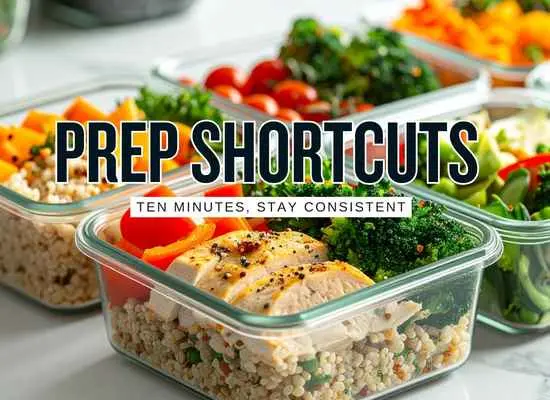
Abs are not built by one perfect meal. They show up when your “default food” makes it easy to hit protein, fiber, and reasonable portions even on your busiest days. The goal here is 10 minutes of active prep that removes decisions, reduces cravings, and keeps you consistent.
Build a food setup that makes abs easier
The fastest version of meal prep is not cooking five different recipes. It is stocking “anchors” that assemble into filling meals fast, plus a few shortcuts that reduce impulse snacking and oversized portions.
30-second summary
Open summary
Simple plate cue
Most meals go better when vegetables and fruit take up a large chunk of the plate, protein is steady, and carbs are present but measured.
Your “abs grocery core”
This is the backbone. If these are in your kitchen, meals become assembly work instead of decisions.
| Category | Fast picks | Fast meals these create | If you get bored, rotate this |
|---|---|---|---|
| Protein anchors | Rotisserie chicken, eggs, Greek yogurt or cottage cheese, canned tuna or salmon, tofu, beans plus cheese | Salad bowls, rice bowls, wraps, snack plates, quick scrambles | Swap one protein per week, keep the rest stable |
| Fiber anchors | Bagged salad, frozen vegetables, beans, oats, berries, chia, lentils | Bigger meals with less snacking pressure | Swap the produce style: crunchy salad vs warm veg |
| Easy carbs | Microwave rice or quinoa, whole grain wraps, potatoes, oats | Meals feel complete without turning into a snack hunt later | Rotate carb type, not portion size first |
| Flavor add-ons | Salsa, hot sauce, mustard, lemon, spice blends, pickles, light dressings | Same ingredients, different taste, same plan | Keep 3 flavors only, not 12 |
A tiny tracking alternative
Instead of tracking everything, track completion: did you follow your default meals today, yes or no. That alone catches a lot of drift.
Meal builder calculator
This estimates a simple daily structure. It is not medical advice. If you have specific needs, follow clinician guidance.
Click “Build my default plan.”
You will get a simple structure plus two snack options.
12 shortcuts that keep you on track
Each shortcut is written as a quick action you can repeat without thinking. Emoji numerals, no fluff.
Lock in a default breakfast
Active time: 2 to 4 minutes
- Pick one base: Greek yogurt, cottage cheese, eggs, tofu scramble, or a protein smoothie.
- Add fiber: berries, oats, chia, or a fruit plus a vegetable on the side.
- Make one flavor change only: cinnamon, cocoa, vanilla, lemon, or frozen fruit mix.
Keep two no-cook protein anchors ready
Active time: 0 to 2 minutes
- Pick two for the week: rotisserie chicken, canned tuna or salmon, eggs, Greek yogurt, tofu, beans plus cheese.
- Store them where you see them first when you open the fridge.
- When time is tight, start with protein, then build the rest around it.
Use frozen vegetables daily
Active time: 1 to 3 minutes
- Keep two bags: mixed vegetables and a simple green vegetable.
- Microwave, then season aggressively with salt, pepper, garlic, lemon, hot sauce, or a light dressing.
- Add your protein anchor on top and call it a meal.
Use salad kits with a portion rule
Active time: 2 minutes
- Use half the dressing and half the crunchy topping.
- Add a protein anchor so it stays satisfying.
- Add beans or extra greens if you want bigger volume.
Pick one easy carb and stop debating it
Active time: about 1 minute
- Choose one for the week: microwave rice, quinoa cups, potatoes, oats, or whole grain wraps.
- Start with a fist-sized portion and keep it consistent for a week.
- If you are still hungry after the meal, add more produce first.
Keep a 3-sauce rotation
Active time: 5 minutes once or twice a week
- Yogurt sauce: Greek yogurt, lemon, garlic powder, salt.
- Salsa base: salsa, lime, cumin.
- Quick vinaigrette: olive oil, vinegar, mustard, salt.
Keep it small
Three sauces are plenty. Too many options turns into decision fatigue again.
Pre-portion two snack options
Active time: 8 to 10 minutes for 3 to 4 days
- Snack option A: protein plus fruit.
- Snack option B: protein plus crunchy vegetables.
- Keep both at eye level so they beat random grazing.
Add beans daily in small amounts
Active time: 1 minute
- Add to bowls, salads, soups, or wraps.
- Rinse canned beans if you want to reduce sodium.
- If your fiber intake is low, increase gradually and drink water.
Prep for 3 to 4 days, not 7
Active time: reduces waste and keeps food fresh
- Restock anchors mid-week instead of forcing a perfect Sunday prep.
- Freeze extras instead of pushing leftovers too long.
- Use shallow containers so food cools faster and stacks easily.
Make “fun food” a planned item, not an accident
Active time: none, this is a shopping move
- Choose one fun item on purpose.
- Keep the rest of the groceries boring and useful.
- If you want dessert, plan it after a real meal, not as a snack replacement.
Use two label checks when buying packaged foods
Active time: 20 seconds per item
| Quick check | What to look for | Easy swap example |
|---|---|---|
| Fiber | Higher fiber options are often more filling. The Nutrition Facts Daily Value for fiber is 28g. | Higher-fiber bread or wrap instead of a low-fiber version |
| Added sugars and sodium | Compare similar products and pick lower added sugars and sodium when you can. | Lower-sugar yogurt, lighter sauces, or simpler cereals |
Run a 10-minute reset twice per week
Active time: 10 minutes on purpose
- Restock: two proteins, two fiber items, one easy carb, one sauce.
- Open and wash what you will actually eat.
- Pre-portion two snack options.
- Write your default meals on a note and follow it for the next 3 to 4 days.
Default meals example
Breakfast: yogurt plus berries plus oats. Lunch: salad kit plus chicken plus beans. Dinner: frozen veg plus rice plus tuna, salsa on top.
Food safety for meal prep
Refrigerate perishable foods within 2 hours. Use most cooked leftovers within 3 to 4 days, or freeze portions you will not eat in time.
Reading note and disclaimer
This is general nutrition education, not medical advice. If you have a medical condition or specific nutrition targets, consider individualized guidance from a qualified clinician or dietitian.